Quick Answer
Hotel groups manage furniture rollouts across properties by standardising a core specification, allocating factory capacity by property and month, phasing container shipments against each opening date, and holding a shared spares pool. The programme runs as one portfolio with a single approval matrix, while each property keeps its own budget, installation plan and handover record.
For procurement questions beyond the scope of this article, see the Karam Spaces FAQ library.
About The Author · Verified Founder Byline
The Author: Lisa Liang
Founder & Creative Visionary | Karam Spaces · CEO
Lisa is the founder of Karam Spaces and leads its multi-property programmes. She has coordinated rollouts where four brands shared one casegood platform and three factories, and is known for treating a rollout as a capacity problem first and a design problem second — because the design can be beautiful and still miss the opening. She treats a rollout as a capacity problem first, mapping factory months against every property's opening date.
- Role: Founder & Creative Visionary, Karam Spaces (CEO)
- Expertise: Programme management, factory capacity allocation, phased shipping
- Credentials: GOFA Member · Certified International Color Coordinator
This guide is written for group owners, FF&E procurement directors and programme managers running two to twenty hotel openings or renovations in the same cycle. It supports one decision: whether to treat each property as a separate project with its own furniture contract, or to run a single custom furniture for hotel chains programme with property-level execution — and how to keep either model from collapsing under its own coordination load.
Direct Answer: A single hotel project fails in familiar ways: a late mock-up, a missed vessel, a wrong finish.
Why Multi-Property FFE Rollouts Fail
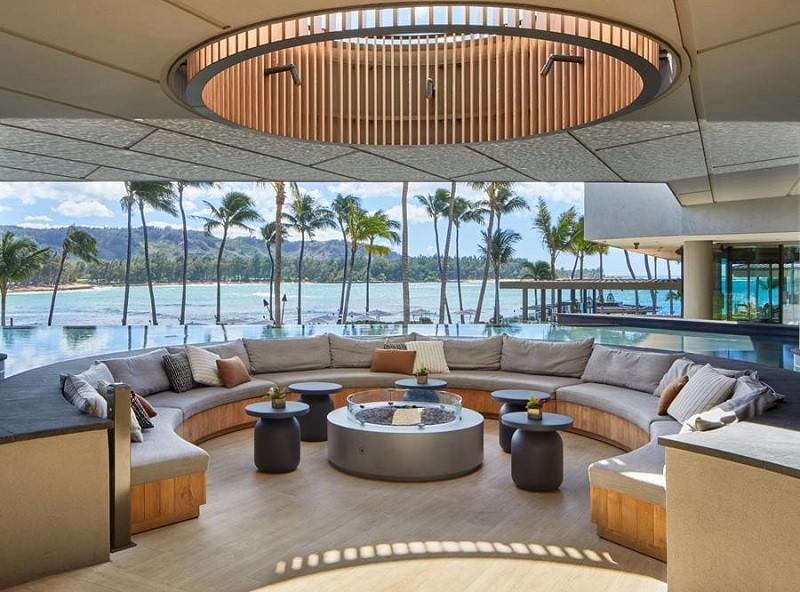
A single hotel project fails in familiar ways: a late mock-up, a missed vessel, a wrong finish. A rollout fails in ways that only appear at portfolio scale, because each property’s small delay consumes a shared resource that another property needed. Five failure modes account for most of the damage. Rollouts fail when each property appoints its own hospitality furniture supplier; one approved specification and one production partner keep the brand standard repeatable.
The scale argument is straightforward. Lodging Econometrics counted 2,433,948 rooms in the global pipeline at Q2 2026, with 521,849 rooms in renovation or conversion. Factory capacity, inspection capacity and installation crews are finite, and groups that book them as a portfolio get priority that single-property buyers do not.
Direct Answer: Standardisation does not mean every hotel looks the same.
Standardising A Custom Hotel Furniture Program Across Brands
Standardisation does not mean every hotel looks the same. It means the engineering underneath is shared, while the visible layer is allowed to differ. The three-tier architecture below is the one we use for multi-brand groups, and it is the single most effective cost lever in a rollout. Standardisation works when the hotel furniture factory retains the master jigs and finish samples, so property three is built from the same reference as property one.
The financial logic is in tooling and spares. If five properties share a casegood platform, tooling is amortised once, minimum order quantities aggregate into a single production run, and one spare-parts inventory covers all five. If each property specifies its own nightstand, the group pays five tooling charges, five MOQs and five spare inventories for an object guests will never consciously notice.
Direct Answer: Capacity planning is arithmetic, not relationship management.
Hotel Furniture Production Capacity Planning For Rollouts
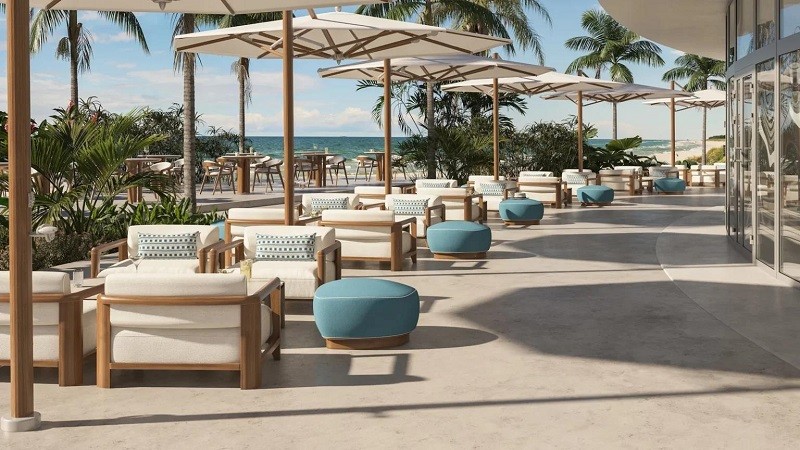
Capacity planning is arithmetic, not relationship management. Start from the installation date, subtract transit and inspection, and you get the production month. Then compare that month against the factory’s committed monthly output — not its annual capacity divided by twelve. Capacity plans often overlook resort lounge furniture, whose weaving and powder-coating lines are separate from the indoor mill and can become the true bottleneck.
Two rules follow. First, never schedule two properties into the same production month unless the factory has proven monthly output above the combined requirement. Second, reserve the month with a deposit and a capacity letter that names the line and the slot. A group that books capacity late pays an expediting premium of 15%–45%, which on a 7,920-piece programme is a seven-figure line item avoided by a five-figure deposit.
Direct Answer: Containers should be phased by opening date, not by production completion.
Container Quantity And Phased Shipping By Property
Containers should be phased by opening date, not by production completion. That sounds obvious until you see a group load property C first because its furniture was ready first, then pay storage on 39 containers while property C’s site is still curing its floors. Ask the resort furniture manufacturer to phase outdoor shipments by opening date, because storing weather-exposed inventory on an unfinished site voids most finish warranties.
Wave planning also protects against the one delay you cannot control. If a vessel is rolled, a two-wave property loses half its furniture, not all of it, and the installation crew still has work. A single-wave property loses the opening. Splitting a 300-key resort into two waves costs a little more in freight and documentation and buys a schedule that can absorb a port disruption.
Direct Answer: A rollout creates a maintenance obligation that outlives the opening by a decade.
After Sales Maintenance And Replacement Stock Strategy
A rollout creates a maintenance obligation that outlives the opening by a decade. The group has two options: let each property hold its own spares, or run a shared pool. The shared pool is cheaper and faster, provided the specification is standardised enough for one part to fit several properties.
The after-sales service level matters more than the inventory. A five-star group cannot wait six weeks for a replacement dining chair in peak season. The contract should state a response time, a repair-or-replace remedy and a shipping method for spares that does not depend on the next furniture container. J.D. Power’s 2025 study found guest satisfaction drops 217 points when a stay problem occurs, and a broken chair in a restaurant is precisely the kind of problem that turns into a review.
For maintenance planning, our hotel furniture maintenance guide and the hotel furniture after sales support team handle spares and repairs across programmes. For the schedule side, the hotel furniture lead time guide shows how each wave is built backward from the opening date.
Direct Answer: Before a group specification is released, confirm four things: the core tier is genuinely shared across brands, the hero tier is capped as a share of value, the tooling is charged once rather than per property, and the spare-parts list is defined by the core t
Custom Furniture For Hotel Chains: What To Check Before You Specify
Before a group specification is released, confirm four things: the core tier is genuinely shared across brands, the hero tier is capped as a share of value, the tooling is charged once rather than per property, and the spare-parts list is defined by the core tier rather than by each designer. If any of those is open, the rollout will pay for the same engineering five times.
Direct Answer: Aggregating volume changes all three commercial variables.
Hotel Furniture Production Capacity: Cost, Lead Time And MOQ Explained
Aggregating volume changes all three commercial variables. A group order of 7,920 pieces can negotiate a lower unit price, a shorter effective lead time because the line is dedicated, and a lower MOQ per SKU because the aggregate quantity clears the threshold. The group that buys property by property gets none of that, and it usually discovers the difference only after the first property is delivered.
Direct Answer: For each wave, confirm the vessel booking six weeks ahead, the HS code at PO stage, the packing list by container and zone, the insurance certificate, the destination clearance file and the site readiness sign-off.
Global Hotel Furniture Shipping: Checklist For Programme Teams
For each wave, confirm the vessel booking six weeks ahead, the HS code at PO stage, the packing list by container and zone, the insurance certificate, the destination clearance file and the site readiness sign-off. Six items, six owners, one date. Drewry’s index is a useful reminder that freight moves weekly: on 12 November 2026 the composite stood at USD 4,305 per 40ft, with Shanghai–Los Angeles at USD 7,416 and Shanghai–Rotterdam at USD 3,504. A programme that prices freight once and holds it for a year is a programme that will absorb the difference.
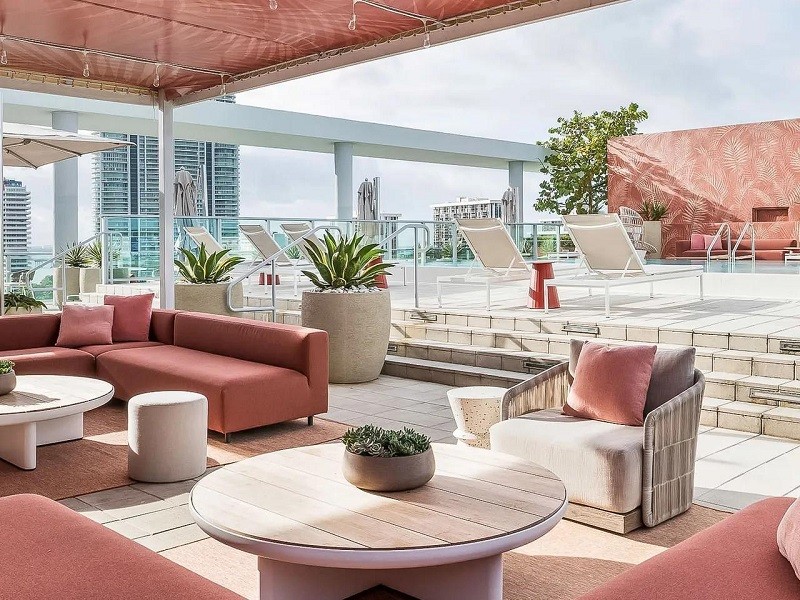
Our indoor hotel furniture, outdoor hotel furniture and custom table bases and tops platforms are built to be shared across properties, which is what makes a three-tier specification practical rather than theoretical. For live programmes, hotel furniture order tracking shows containers by property and wave.
Frequently Asked Questions
Q1: How do hotel groups manage furniture rollouts across multiple properties?
They standardise a core specification, book factory capacity by property and month, phase container waves against opening dates, and run a shared spares pool — while each property keeps its own budget, installation sequence and handover record.
Q2: Should each property have its own furniture supplier?
Usually not. A single programme contract gives the group capacity priority, aggregated MOQs, one tooling charge and one warranty channel. Property-level suppliers make sense only for a hero piece or a local craft item that the group brand requires.
Q3: How much spare stock should a rollout hold?
Budget 3%–5% of installed value, split between property-level fast movers (1.5%–2.5%), a regional structural pool (2%–3%) and a group pool for seasonal and discontinued-risk items.
Q4: What is the biggest risk in a multi-property rollout?
Capacity collision: two properties scheduled into the same factory month. It pushes one opening and forces the other to pay expediting premiums of 15%–45%. Book the month, name the line, and get it in writing.
Next Step
If you are planning three or more openings in the same cycle, send us the property list, key counts and target dates. We will return a capacity-loaded programme showing which months collide, which containers to split, and where a shared specification would save the most tooling. No charge for the first model. Request a hotel furniture quote to start, or work with a hotel furniture supplier who already runs multi-property programmes across brands. Group procurement definitions are covered in our hotel furniture FAQ.